
REVIEW · FAMAGUSTA & ANCIENT SALAMIS
A Day Trip to Medieval FAMAGUSTA (Kyrenia, Nicosia or Famagusta )
Famagusta in one long, history-packed day. This is a private tour with hotel pickup and drop-off, so you spend less time figuring out logistics and more time listening to the story behind North Cyprus. I also like the small-group feel (up to 4), which makes it easier to move at your pace without getting herded. One thing to consider: it is a full day with sightseeing time on your feet, and lunch is not included, so you will want a plan for when you get hungry.
What really hooked me is how the day links very different eras. You start at St Barnabas Monastery and Icon Museum for the tomb story, then you move to Salamis ruins where the sites read like a textbook you can walk through. The pace is paced to fit real breaks for photos and questions, but it still totals about 7 hours.
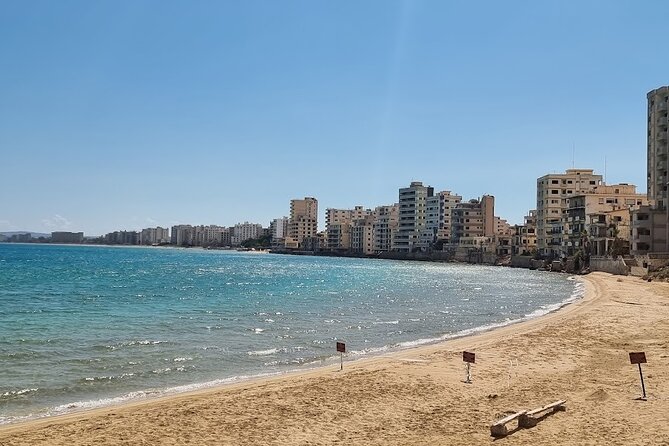
If you like medieval walls, Gothic architecture, and Ottoman-era details, Famagusta is the main event. You will also get a guided walk that connects the city’s Lusignan, Venetian, and Ottoman layers, and it ends with a walk in the abandoned Varosha (Ghost Town) area.
In This Review
- Key Points Before You Go
- How the Private Format Works (Pickup, Pace, and Group Size)
- St Barnabas Monastery and Icon Museum, The Tomb Story That Sets the Tone
- Salamis Ruins, Gymnasium and Theatre Worth the Drive
- Walking the Medieval Walled City of Famagusta, Walls That Still Make Sense
- Lala Mustafa Pasha Mosque, Gothic Cathedral to Active Mosque
- Namık Kemal Zindanı ve Muzesi, A Prison Story Inside a Venetian Palace
- Varosha (Ghost Town), The Walk Through an Abandoned Quarter
- Timing, Logistics, and What to Bring for a 7-Hour Day
- Price and Value, What You Get for $360 Per Group
- Should You Book This Medieval Famagusta Day Trip?
- FAQ
- How long is the Medieval Famagusta day trip?
- What is the meeting point for the tour?
- Where does pickup happen?
- How many people are in a group?
- What time does the tour start?
- What sites are included in the day?
- Are tickets included?
- Is lunch included?
- What language is the tour offered in?
- Can I get a refund if I need to cancel?
Key Points Before You Go
- Private guide, up to 4 people, so questions do not get lost in a crowd
- St Barnabas Tomb and Icon Museum for a surprisingly dramatic origin story
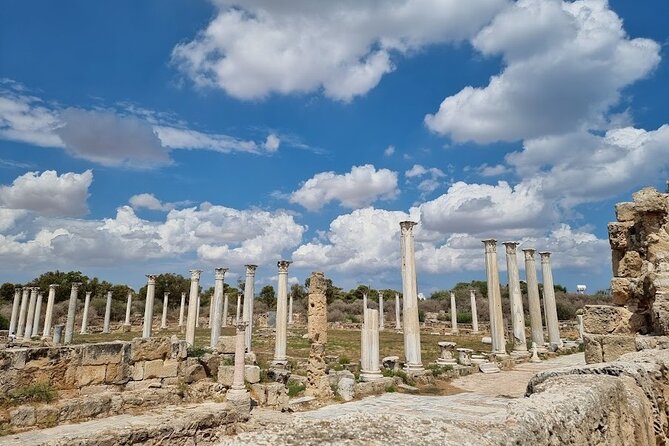
- Salamis ruins with major Roman-era features like a theatre and Roman baths
- Lala Mustafa Pasha Mosque as a former Gothic cathedral, still active today
- Namik Kemal Zindanı ve Muzesi and a prison story tied to Ottoman politics
- Varosha (Ghost Town) for the emotional impact of a place paused in time
How the Private Format Works (Pickup, Pace, and Group Size)
This is built as a smooth, low-stress day. The tour begins with hotel pickup in Kyrenia, and the route is also offered from Famagusta. If you are staying in Nicosia, the same day-trip structure applies, but pickup from other areas may cost extra, so it is worth checking your starting point when booking. Either way, you get a driver/guide and a private transfer, which matters because travel time on this route is real.
The group size is capped at up to 4, and that changes everything. In a small group, you can slow down where you care, ask follow-up questions, and take photos without feeling rushed. The itinerary also includes time for you to explore at your own pace during the guided stops, so you are not just walking in a line like a moving museum label.
The total time is about 7 hours, so think of it as a full day, not a quick taste. You will be spending real chunks at the major sites, and you should come ready to stand, walk, and keep your energy up. Moderate physical fitness is recommended, mainly for sightseeing and uneven ground.
More crossings to Famagusta and Salamis:
- Ayia Napa/Protaras/Larnaka: Famagusta and Salamis Day Trip
★ 4.7 · 559 reviews - Protaras: Famagusta, Blue Lagoon and Turtle Cove Boat Trip
★ 4.6 · 428 reviews - Ayia Napa: Blue Lagoon, Turtle Cove and Famagusta with BBQ
★ 4.9 · 386 reviews
St Barnabas Monastery and Icon Museum, The Tomb Story That Sets the Tone
Your day starts with the St Barnabas Monastery and Icon Museum. This stop is not just about pretty icons and monastery walls. It is also about the story of Barnabas himself, including the tradition that he was Jewish, studied in Jerusalem, then helped spread Christianity in Cyprus. The story gets heavy, with conflict over his beliefs, his death, and the long effort to locate and honor his tomb.
What I like about starting here is how it sets a tone for the rest of the day. Even if you do not consider yourself a religious-history person, the way the guide connects beliefs, community, and political pressure makes the setting feel alive. You also get to see the saint’s tomb as part of the visit, which turns this from a quick stop into a real meaningfully timed one.
You will have about 2 hours here, and admission is included. That extra time helps, because you can take it slowly, look through what is on display, and ask questions without the day feeling rushed.
Practical tip: If you are sensitive to longer narration, pace yourself in the museum, then save your questions for after you see the tomb. It keeps the visit from feeling like a nonstop lecture.
Salamis Ruins, Gymnasium and Theatre Worth the Drive
After St Barnabas, you head to Salamis ruins, a major site with layers that reach far back. The day’s framing connects a mythic foundation story and then focuses on what you can actually stand in today. You will spend about 1 hour at the ruins with your guide, which is a good amount for an efficient walkthrough.
The highlights are the big Roman-era anchors you get to visualize in place. The tour includes time for the gymnasium, theatre, and Roman baths, which gives you a sense of how public life, entertainment, and daily bathing culture worked in an ancient city. Even in one hour, you can connect the dots if your guide points out what to look for.
The value here is simple: Salamis is one of the best places in the region to connect “I’ve seen ruins on a map” with “I get how it functioned.” A guide helps you avoid the common problem of looking at stones and missing what makes each section distinct.
Practical tip: Wear shoes with good grip. Ruins can have uneven surfaces, and you will be doing this after a morning transfer.
Walking the Medieval Walled City of Famagusta, Walls That Still Make Sense
Then you move into Famagusta’s walled old city for a guided walk. Expect about 1 hour here, enough time to cover the key medieval streets and major structures without turning the day into an all-day marathon.
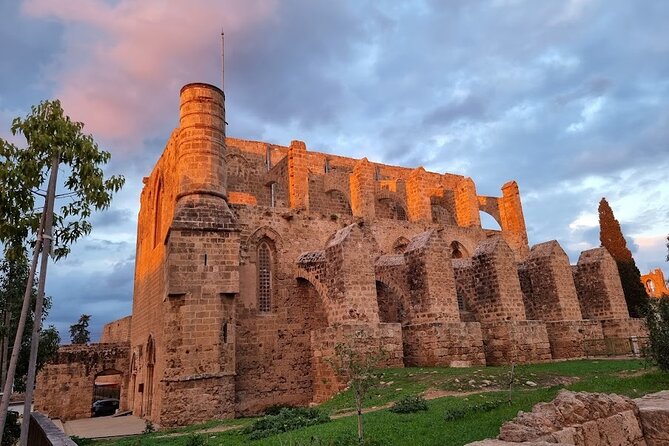
The big theme is how the city’s walls and architecture reflect shifting rulers. The walls are tied to Lusignans, and later changes came during Venetian control. That matters because you are not just seeing isolated monuments. You are seeing how power left physical fingerprints on the city layout, entrances, and defensive design.
As you walk, your guide connects the sites you see to the larger story of Cyprus passing between different eras. This is where the private format really earns its keep. If you have questions like why a street looks the way it does or how forts and religious buildings relate, you will get a direct answer rather than a generic one.
Lala Mustafa Pasha Mosque, Gothic Cathedral to Active Mosque
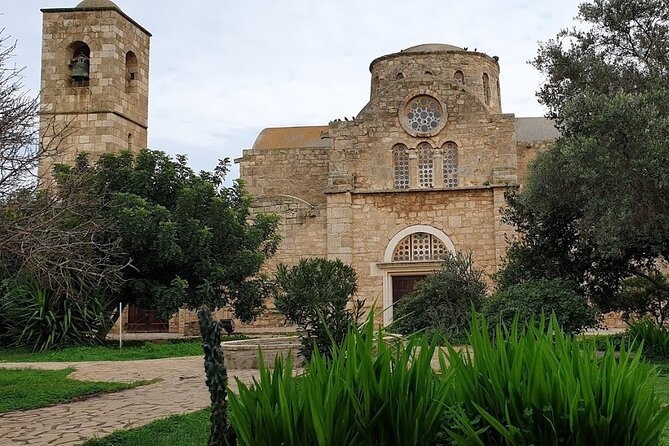
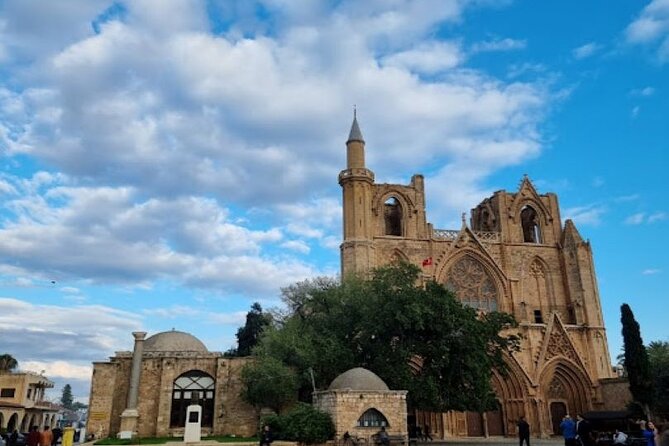
A standout stop is Lala Mustafa Pasha Mosque. The story here is unusually concrete for a historical site, because the building’s identity has changed over time in a way you can feel while looking.
In the Lusignan period, it functioned as a cathedral built between 1298 and 1312, named St Nicholas Cathedral. The architecture is Gothic, and the tour also notes a famous ficus sycomorus tree planted on the side of the building, with a tradition of it dating back to 1299. When the Ottomans took over, the cathedral was converted into a mosque, and it is still used as a mosque today.
I like this stop because it is not just “look at the building.” It is “notice what stayed, and what changed.” Even if you are not an architecture nerd, the transformation story makes the details more meaningful.
You will spend about 1 hour here, and entry is free. This is a good moment to slow down, especially if you want time to absorb the shape of the Gothic elements before the rest of the day moves on.
More Kyrenia and St Hilarion days:

Namık Kemal Zindanı ve Muzesi, A Prison Story Inside a Venetian Palace
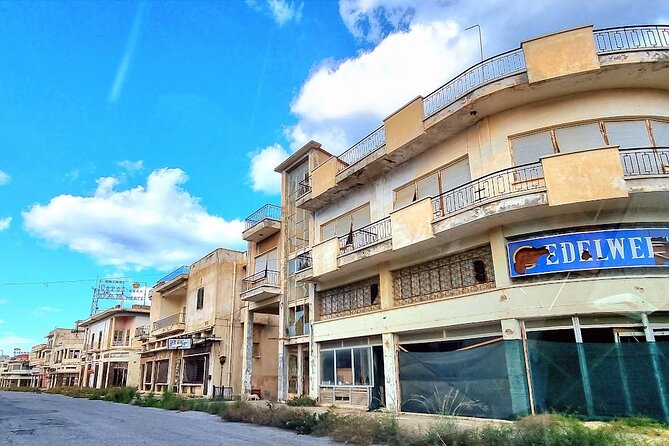
Next up is Namık Kemal Zindanı ve Muzesi, with about 1 hour. During the Ottoman period, Famagusta served as a place of exile, including for political prisoners. Namık Kemal, a writer who was against the Sultan, is the focus of this stop. He was imprisoned in Famagusta for about 38 months.
The tour ties the story to the location itself, noting that his prison is inside a Venetian palace area. You also get context about Namık Kemal’s books, and there is a statue in the square named after him. The tour information also says the statue was replaced in 1953.
This stop works best if you like human-scale history. Instead of only dates and rulers, you are dealing with a person’s time in confinement and the political tension that brought him there. A private guide helps connect the dots, so you are not left reading labels alone.
Practical tip: If you prefer quieter stops, this one can feel calmer than the larger open ruins. It is still powerful, but it is easier to take in slowly.
Varosha (Ghost Town), The Walk Through an Abandoned Quarter
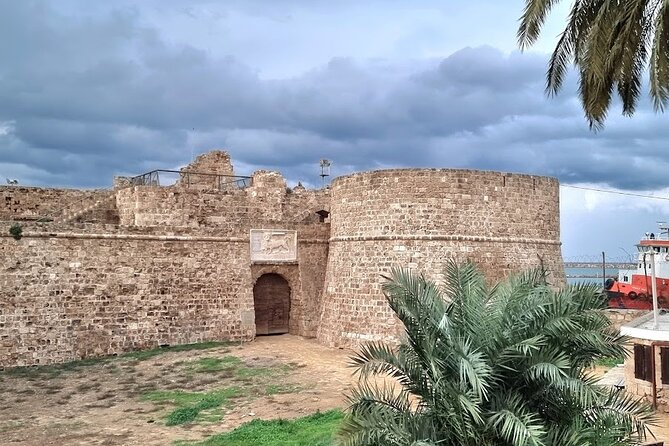
The final emotional highlight is the Ghost Town area of Famagusta, known as Varosha. This is the place that most people remember because the contrast is so sharp. The area was once known for hotels and active tourism, then it was abandoned in 1974. The information you get during the walk frames what happened after, including that it later reopened in 46 years.
You will walk through the area with your guide for about 1 hour. Even without knowing all the political details, the physical reality hits. It feels like a city paused mid-connection, where the streets and buildings create a strange ghost of what used to be normal daily life.
If you want a single reason to choose this tour, it is this stop. It is the one where the guide’s context matters most, turning your photos into understanding instead of just images.
Practical tip: Bring something for sun protection. This walk can feel exposed, and you will appreciate shade or a hat.
Timing, Logistics, and What to Bring for a 7-Hour Day
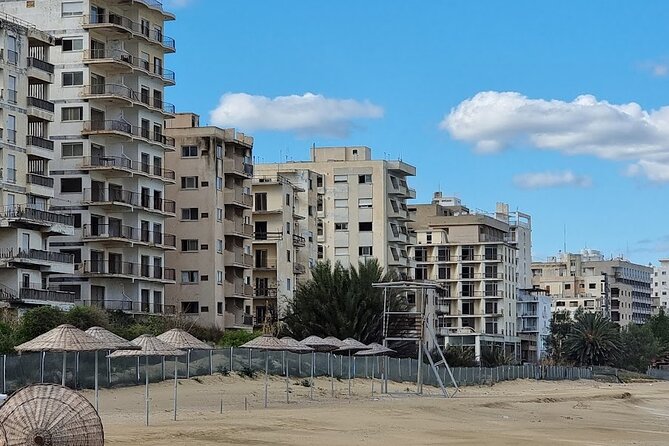
This tour runs for about 7 hours, starting with a morning pickup window from roughly 9:30 AM to 10:00 AM. Your day is structured around the timed stops, so you will not be stuck waiting around.
Here is what that means for you in practical terms:
- Expect a morning start and a packed middle.
- You will likely want to eat before you go, since lunch is not included.
- You will do multiple walking segments, including inside town areas and the Varosha quarter.
Included basics are helpful for comfort: bottled water, fuel surcharge, and tickets for the historical sites. Since lunch is not included, plan to grab something either before the tour starts or during the free time you create around the route. When I hear guides talk confidently about local options, it usually means they can point you to something close by rather than making you hunt all day.
If you are the type who loves asking questions, this format rewards you. If you are more of a quiet observer, you still get time to wander at your own pace during key stops.
Price and Value, What You Get for $360 Per Group
The price is $360.07 per group, up to 4 people, for about 7 hours. That can sound steep until you break it down. You are paying for a private transfer with driver/guide, plus entry to multiple historical sites. You also get bottled water and the convenience of pickup and drop-off from selected hotels in Kyrenia or Famagusta.
The value is strongest when:
- You are traveling with a small group or family that can share the cost.
- You care about interpretation, not just photos.
- You want a day route that connects St Barnabas, Salamis, and medieval Famagusta without you dealing with transport planning.
If you are solo and hoping for the cheapest option, a private format can be more expensive than joining a larger group. But if you want control and context, this one is built for that.
Should You Book This Medieval Famagusta Day Trip?
Book it if you want a focused North Cyprus day that connects major sites with clear storytelling. I would especially recommend it if Varosha and the medieval walled city are on your must-see list, and if you like history explained in a way that makes you understand what you are standing next to.
I would think twice if you hate full-day schedules or you know you will struggle with walking and standing for several different stops. And since lunch is not included, you should be comfortable handling food on your own during a busy day.
If you choose this tour, I suggest you come with two questions you actually care about, for example: how the building changed from cathedral to mosque, or why Salamis sites are laid out the way they are. With a private guide, those answers will stick.
FAQ
How long is the Medieval Famagusta day trip?
It runs for about 7 hours (approx.).
What is the meeting point for the tour?
The start meeting point is Bella View Art Boutique Hotel, Zafer Cad. No: 2 Topkapı Sok, Ozankoy 9514 Cyprus. The tour ends back at the meeting point.
Where does pickup happen?
Pickup is offered from centrally located hotels in Kyrenia. The tour also notes pickup from selected hotels from Kyrenia or Famagusta. If you are starting from other cities, there may be an extra cost.
How many people are in a group?
This is a private tour/activity with only your group participating, up to 4 people.
What time does the tour start?
The opening hours list the pickup window as Monday to Sunday, 9:30 AM to 10:00 AM.
What sites are included in the day?
You visit St Barnabas Monastery and Icon Museum, Salamis ruins, the medieval walled city of Famagusta, Lala Mustafa Pasha Mosque, Namık Kemal Zindanı ve Muzesi, and the Varosha Ghost Town area.
Are tickets included?
Yes. Tickets for historical sites are included.
Is lunch included?
No. Lunch is not included.
What language is the tour offered in?
The tour is offered in English.
Can I get a refund if I need to cancel?
No. This experience is non-refundable and cannot be changed for any reason. If you cancel or ask for an amendment, the amount you paid will not be refunded.
Just listed around Cyprus
- From Roses to Mountain, Agros (Troodos area)- Wine -Nature Walk★ 5.0 · 1 review
- E-bike tour from Omodos to Milomeris Waterfall-Milia Bridge through Platres.★ 5.0 · 1 review
- 5 Hour trip-Guided Craft Beer Brewery tasting & Cypriot Food Trip★ 5.0 · 1 review
- Green Bay Private Scuba Diving Adventure★ 5.0 · 1 review
- Private 5-Hour Jeep Tour in Cyprus from Ayia Napa★ 5.0 · 1 review
- 2 Hours Private Sunrise Sup with breakfast★ 5.0 · 1 review
- St. Hilarion Castle and Bellapais ruines- with private guide★ 5.0 · 1 review
- Turkish Landmarks in Old Town Nicosia – Private Walking Tour★ 5.0 · 1 review
Famagusta & Ancient Salamis, compared.
Ayia Napa/Protaras/Larnaka: Famagusta and Salamis Day Trip
Read our review →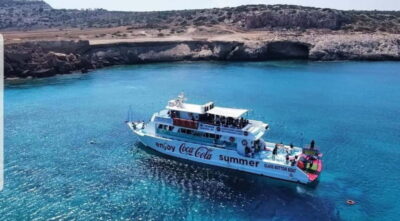
Famagusta, Blue Lagoon and Turtle Cove Boat Trip
Read our review →Blue Lagoon, Turtle Cove and Famagusta with BBQ
Read our review →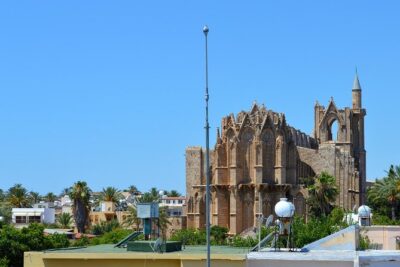
Ghost-Town Famagusta Mini Bus Tour from Protaras and Ayia Napa
Read our review →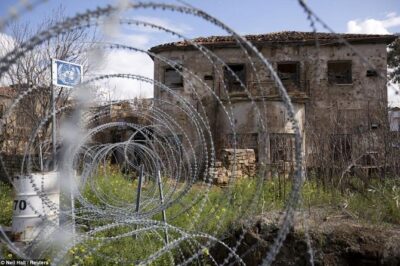
Full-day Famagusta: Lost Cities & Coastal Secrets from Paphos
Read our review →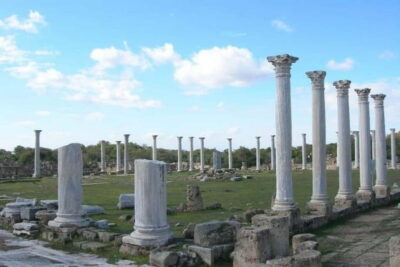
Choirokitia & Famagusta Guided Tour with Transfers
Read our review →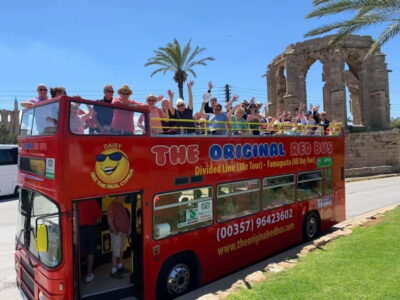
From Aya Napa/Protaras: Varosha Ghost Town Tour on a Red Bus
Read our review →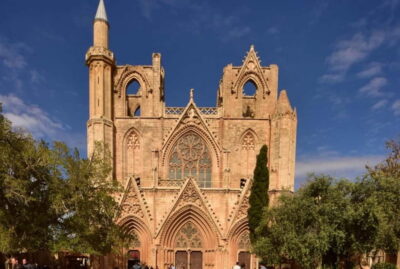
Famagusta & Salamis with a Polish-speaking Guide
Read our review →Browse the lists this tour appears in