
REVIEW · THINGS TO DO IN NICOSIA
Divided Capital NICOSIA
Nicosia has a way of making the past feel personal. This private walking tour is built around the city’s divided core, with stops at major landmarks on both sides, capped by the moment you cross at Ledra Street. It’s a 3 hour experience with professional guidance, and the pacing is designed so you actually hear the stories, not just see the signs.
I like two things a lot: first, the mix of checkpoints, gates, and landmark sites keeps the history concrete. Second, the private group format means your guide can slow down for questions, and you get a short break for a drink at Buyuk Han. One thing to keep in mind is that the tour’s flow includes both Greek Cypriot and Turkish Cypriot parts, and one past booking suggested the balance can depend on the guide.
Key highlights worth your attention
- A private tour for up to four so the route feels flexible instead of rushed
- Ledra Street crossing point is worked into the tour start and finish, with passport checks along the way
- Major landmarks with free entry listed at each stop, so you can focus on the walk and explanations
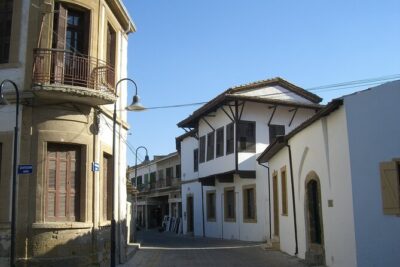
- Ottoman and Venetian layers shown in plain sight, especially around Samanbahce and the Venetian Column
- Buyuk Han as the break point where you can stretch your legs and grab Cypriot coffee and borek
In This Review
- Why This Nicosia Walk Feels Different Than a Standard Sightseeing Loop
- Ledra Street Crossing Point, Start Here, End Here
- Kyrenia Gate: The Old Wall That Still Shapes the City
- Samanbahce Quarter: Ottoman-Era Care, Plus a Cistern in the Middle
- The Venetian Column: A Lion Symbol and a Story That Crosses Centuries
- Selimiye Camii: From Lusignan Cathedral to Ottoman Mosque
- Buyuk Han: The Best Pause in the Middle of a Busy City Story
- Famagusta Gate: Photos, History, and Another Layer of the Walls
- Archbishop’s Palace: A Picture Stop With Meaning Behind It
- Private Tour Value: Getting More From Every Step
- What to Expect From the Walking Pace and Timing
- Who This Tour Is For (and Who Might Want a Different Style)
- Should You Book Divided Capital Nicosia?
- FAQ
- How long is Divided Capital Nicosia?
- Is this a private tour?
- Where does the tour start and end?
- Do I need a passport?
- Is admission included for the stops?
- Is lunch included in the tour?
- What language is the tour offered in?
- Can children participate?
- What is the refund policy if I cancel?
Why This Nicosia Walk Feels Different Than a Standard Sightseeing Loop
This is not a generic checklist tour. You’re walking through a city that still functions as a living border story, which changes how you notice everything from the gates to the church turned mosque.
You start and end at Ledra Street, so the tour naturally frames the divide instead of treating it like a quick photo moment. If you care about how places change hands, languages, religions, and symbols over time, you’ll get more out of this route than you would with a stop-and-go route.
The tour runs about 3 hours, which is long enough to connect the dots, but short enough that you’re not dragging yourself back across town after. And because it’s private, you’re not stuck with a fixed group pace.
Ledra Street Crossing Point, Start Here, End Here
You meet at Ledras, Nicosia 1011, Cyprus, and that same location is where the tour ends. That matters, because it means the experience is built like a loop that begins with the border reality and closes with the city right under your feet.
Expect passport checks at points during the walk. You’ll want a valid passport ready to show at the check points, not buried at the bottom of your bag. Bring it in a place you can reach without fumbling, because time at borders can be unpredictable.
This is also a good stop to set expectations. If you want calm, steady answers as you walk, tell your guide early. The private format is there for a reason.
Plenty more Things to Do in Nicosia
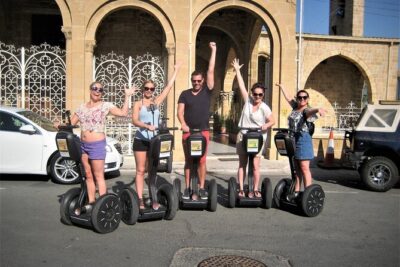
- 3-hour Nicosia Segway Tour
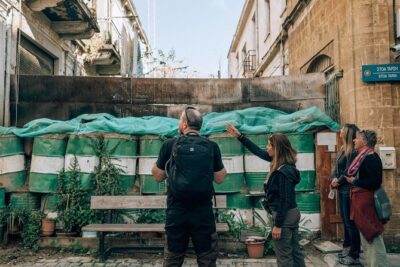
★ 5.0 · 323 reviews - Nicosia: Green Line and Buffer Zone Guided Walk
★ 5.0 · 147 reviews - NORTHERN CYPRUS ALL-IN-ONE Private Day Trip from Nicosia
★ 5.0 · 89 reviews
Kyrenia Gate: The Old Wall That Still Shapes the City
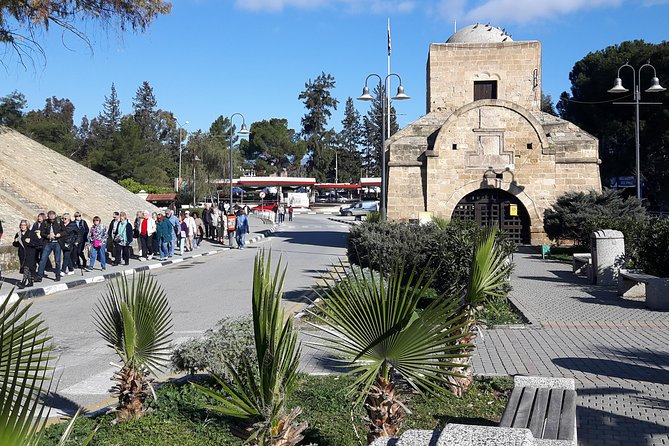
Your first landmark is Kyrenia Gate, described as one of the oldest gates to enter the walled city of Nicosia. This is one of those stops that helps you orient quickly, because gates are where cities slow down, people filter through, and power shows up in stone.
Even if you’re not a wall-nerd, gates teach you how Nicosia is organized. Once you know where the entry points were, the later sights make more sense, including why certain areas matter so much in both modern and historical narratives.
You’ll spend about 20 minutes here. That’s just enough time to look around, ask a few questions, and understand what you’re looking at before you move on.
Samanbahce Quarter: Ottoman-Era Care, Plus a Cistern in the Middle
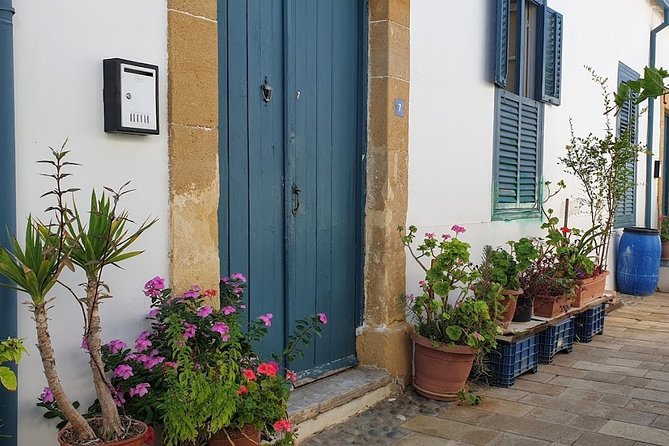
Next comes the Samanbahce Quarter, built in 1900 by Ottoman Saban Pasa. The key detail here is practical and human: 72 houses were given to people who were in need. It’s not just architecture, it’s a statement about how a city housed and managed hardship.
You’ll also see the cistern in the centre. That’s one of those features that makes history feel less abstract. In older cities, water systems were everything, and a cistern tells you where survival met design.
Plan for about 10 minutes at this stop. It’s short, so if you’re the kind of person who likes to read every plaque, ask your guide for the two or three details you should notice most.
The Venetian Column: A Lion Symbol and a Story That Crosses Centuries
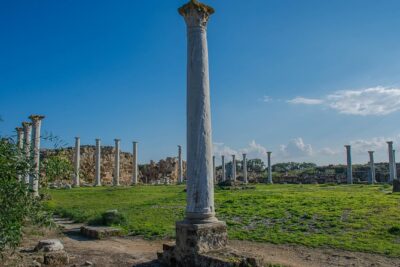
Then you move to the Venetian Column. It was brought to Nicosia from the ancient city of Salamis during the Venetian period, and the symbol of the St. Mark Lion was on top of the pillar.
This stop is worth it for the simple reason that you’re looking at reuse, not just preservation. Pieces traveled, empires shifted, and objects were carried along with people and power. A column like this becomes a kind of historical bookmark.
You’ll spend around 10 minutes. In a short window, the guide’s job is to explain what the lion meant, why this object ended up here, and how that fits the longer timeline of the island.
Selimiye Camii: From Lusignan Cathedral to Ottoman Mosque
At Selimiye Camii, you’ll see how buildings can be reshaped without erasing the original structure. The site was built as a cathedral by the Lusignans, with typical Gothic style. When the Ottomans came to the island in 1570, minarets were added, and it was converted into a mosque.
The name shifts too. It was known as Ag. Sophia Mosque until 1956, and afterward it was renamed Selimiye Mosque. That timeline turns the site into a timeline you can walk through.
Expect about 20 minutes here. This is a good place for questions about symbols and architecture. If you’ve ever wondered how quickly religions and empires can leave physical marks on the same walls, this is where it becomes obvious.
Same coast, a different sort of afternoon:
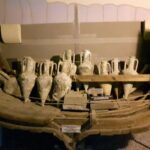
Buyuk Han: The Best Pause in the Middle of a Busy City Story
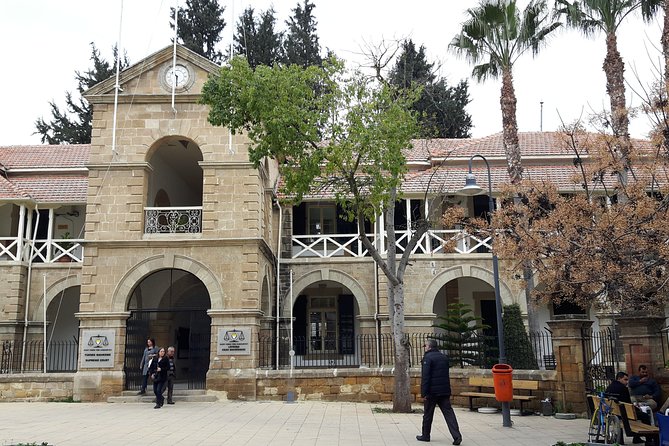
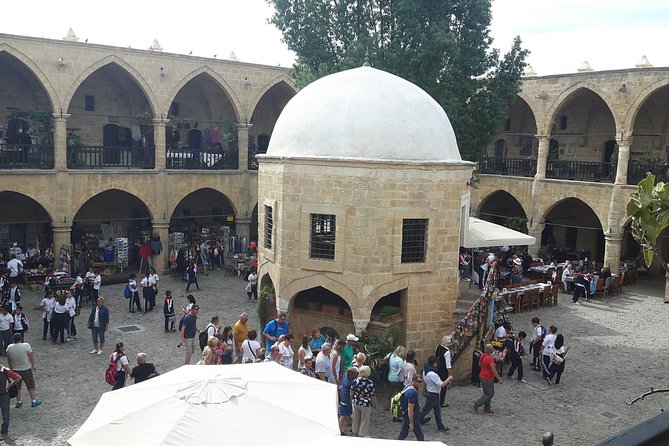
The longest stop is Buyuk Han, about 40 minutes. It was built in 1572 by Muzaffer Pasha, and it includes a cistern and mosque in the centre.
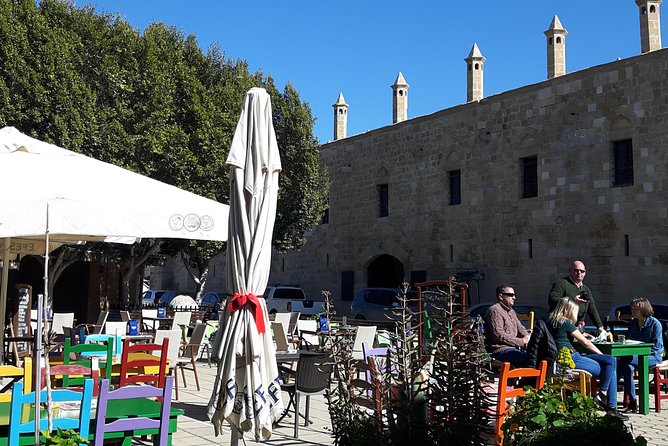
This is also the point where you can shift gears from pure walking into a slower, human pace. The program specifically notes enjoying Cypriot coffee and traditional borek. Even if you’re not buying snacks, the time gives you a chance to sit, catch your breath, and let the historical pieces connect.
Why this stop matters: it’s a reminder that historic buildings were once functional spaces, not just museum objects. A han is a caravanserai type of place, so it ties the story to trade, movement, and everyday needs.
You’ll likely appreciate this pause if you’re walking in warmer weather or if you simply want a moment where the tour stops being all motion.
Famagusta Gate: Photos, History, and Another Layer of the Walls
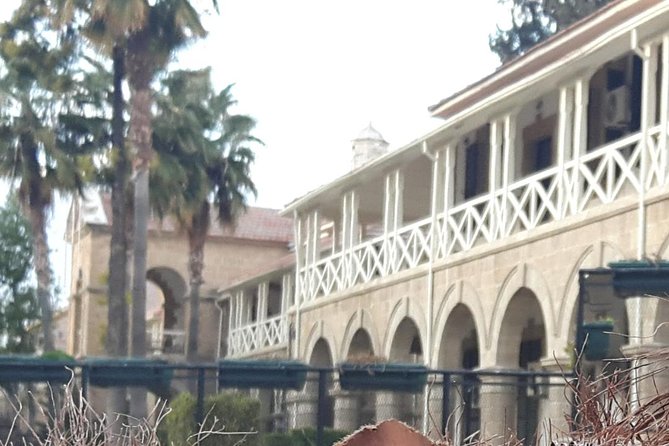
After Buyuk Han, you’ll walk to Famagusta Gate. The tour frames it as one of the three gates that surround Nicosia. You’ll also stop for photos and listen to the gate’s history.
The time listed is 40 minutes, which is longer than a quick picture stop. That extra time is a clue. You’re meant to understand how these gates worked as boundaries, and how that idea still affects how the city feels today.
This is a strong stop for anyone who likes skyline moments, street-level views, and the feeling of standing at a historical threshold. It’s also where a good guide can make the story feel local rather than textbook.
Archbishop’s Palace: A Picture Stop With Meaning Behind It
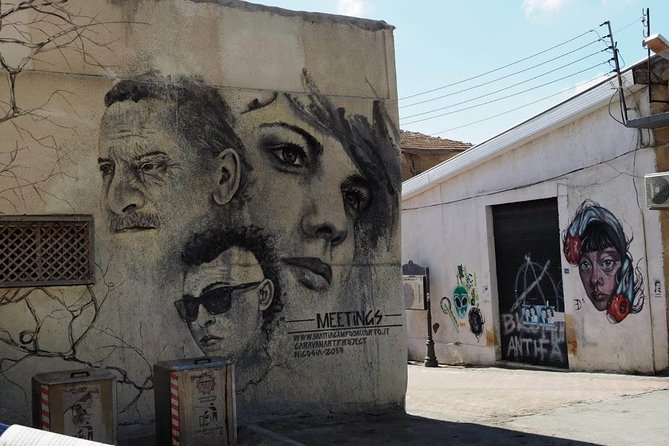
You’ll next make a stop at the Archbishop’s Palace for photos, about 20 minutes. Even if you’re just grabbing a few pictures, the guide’s narration is what turns it from a backdrop into part of the city’s identity.
This is one of those places where architecture and position matter. In divided cities, major institutions often sit where they can be seen, felt, and remembered.
If you’re traveling with someone who isn’t as into history, this stop is still a good compromise. You get both the visual and the explanation, and then you can move on without the tour turning into a lecture.
Private Tour Value: Getting More From Every Step
The price is $216.86 per group, up to four people, for about 3 hours. That cost can look high at first glance, but the private setup changes the math. If you’re two or three people, you’re basically buying a guide plus a tailored pace rather than paying per head.
The tour includes professional guidance, and it’s offered in English. The listing also notes a mobile ticket, which is convenient, and that service animals are allowed. It runs Monday through Saturday, 9:00 AM to 1:00 PM, so you can usually fit it into a morning plan.
One more value point: flexibility. In the best case scenario, your guide can adjust timing, and you’re not stuck watching the clock while your group strains to keep up. The pacing here is praised as a strong fit for the time window.
And yes, one guide named Sirin was repeatedly highlighted as friendly and patient, with a way of turning the city into a story you can follow. If you get her, you’re likely to notice how much detail she brings to both sides of Nicosia, plus she tends to make time for a drink break.
What to Expect From the Walking Pace and Timing
This is a walking route with short stops. The itinerary spends time at Kyrenia Gate (20 min), Samanbahce (10 min), Venetian Column (10 min), Selimiye Camii (20 min), Buyuk Han (40 min), Famagusta Gate (40 min), Archbishop’s Palace (20 min), then wraps at Ledra Street Crossing Point (20 min).
That structure is smart. It gives you enough time at each major site for context, without turning the tour into a full day endurance test. Still, wear comfortable shoes. Even with breaks, you’re spending hours on city sidewalks.
If you’re sensitive to uneven pavement or crowds near gates, plan for that. This is a historic walled city area, so you can expect old streets, not modern wide sidewalks.
Who This Tour Is For (and Who Might Want a Different Style)
This is ideal for history lovers and anyone who wants the “why” behind the sites, not just the “what.” The itinerary is built to show how the island’s rule changed over time and how that shows up in buildings and symbols.
It also fits you if you like guided navigation. Ledra Street can feel confusing at first, and a guide helps you move with confidence and understand what you’re seeing as you go.
If your top priority is a perfectly balanced, equal emphasis on every cultural angle, choose your expectations carefully. One past booking suggested the guide’s focus leaned more toward the Northern side. That doesn’t mean the Southern side is missing, it just means you might want to ask your guide early how they plan to distribute time.
Should You Book Divided Capital Nicosia?
Book it if you want a private, English-guided look at Nicosia’s divided story that connects gates, architecture, and border reality into one walk. The route is designed for a morning window, includes a good break at Buyuk Han, and every stop is listed as admission free, which helps you plan your budget.
Skip it or consider an alternative if you hate walking, you cannot carry a passport for check points, or you only want a quick overview without the border context. For most visitors, though, this is one of the cleanest ways to get your bearings fast while learning what makes this city such a powerful place to understand Cyprus.
FAQ
How long is Divided Capital Nicosia?
The tour lasts about 3 hours.
Is this a private tour?
Yes. It’s a private tour/activity, and only your group participates.
Where does the tour start and end?
It starts and ends at Ledras, Nicosia 1011, Cyprus.
Do I need a passport?
Yes. You must bring valid passports to show at the check points.
Is admission included for the stops?
The itinerary lists admission as free for the stops included.
Is lunch included in the tour?
No. Lunch is not included in the program.
What language is the tour offered in?
The tour is offered in English.
Can children participate?
Children under 12 must be accompanied by parents.
What is the refund policy if I cancel?
It is non-refundable and cannot be changed for any reason.
Just listed around Nicosia
- Turkish Landmarks in Old Town Nicosia – Private Walking Tour★ 5.0 · 1 review
- Explore Nicosia City with a local from Nicosia border or Kyrenia★ 5.0 · 1 review
- Famagusta, Kyrenia and Nicosia As 3 city Tour from North Cyprus★ 5.0 · 1 review
- Around Cape Greko walk (upto 10 km)★ 5.0 · 1 review
- Private Transfer from Nicosia to Larnaca Airport in 6 seater Taxi★ 5.0 · 1 review
- Half-Day Private Tour of Nicosia★ 5.0 · 1 review
- From North Cyprus: Nicosia city walking tour★ 5.0 · 1 review
- Private Walking Tour of Nicosia★ 3.0 · 2 reviews
Things to Do in Nicosia, compared.
NORTHERN CYPRUS ALL-IN-ONE Private Day Trip from Nicosia
Read our review →
Kyrenia Tour (only from Nicosia/Kyrenia Hotels)
Read our review →
Troodos Mountains, Kykkos and Omodos Bus Tour from Paphos
Read our review →Browse the lists this tour appears in