
REVIEW · DISCOVER SCUBA & WRECK DIVES
Paphos: Discover Scuba Diving Half-Day Tour
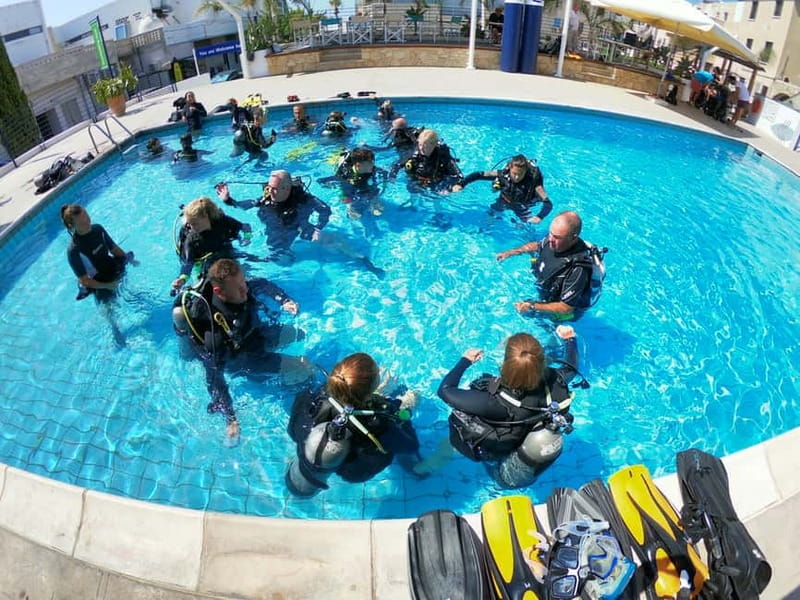
First-time scuba can feel like a lot. This Paphos half-day keeps it manageable, with a full setup in a pool before you go to the shore site, plus a real goal of descending to 5m on your first open-water session. I like that they walk you through the why behind each skill, including how you equalize pressure and the hand signals you will use underwater. I also love the small-group feel, since it is limited to 8 participants and you get real attention from PADI Professionals. One drawback to plan for, though, is that it is not for everyone, since you must be a comfortable swimmer and there is a strict medical screening.
You will start at Cydive with welcome refreshments, then move through briefing, equipment checks, and a structured class. After that, you do the main underwater experience near the Roman Wall, where you might spot ancient pieces like amphorae and anchors, and depending on the season, even green sea turtles. The whole thing runs about 3 hours, so it is a great way to taste scuba without committing to a full course.
In This Review
- Key Highlights That Matter
- Getting Oriented at Cydive in Paphos
- The Safety Briefing, the Gear, and the Hand Signals You Actually Use
- Pool Skills: Breathing, Equalizing, and Moving in Full Gear
- Walking to the Roman Wall Shore Site
- The Open-Water Experience Near the Roman Harbor Underwater World
- Why the Ancient Underwater Setting Feels Better Than Typical First-Time Scuba
- The Short Follow-Up Class and What You Get at the End
- Value and Price: Is $106 a Good Deal?
- Who This Works Best For (and Who Should Skip It)
- Timing Tips and Practical Stuff to Bring
- Should You Book This Paphos Discover Scuba Half-Day?
- FAQ
- How long is the Paphos Discover Scuba tour?
- What is the group size?
- Do I need to do eLearning before the activity?
- Is there a medical questionnaire?
- Do I need to know how to swim?
- What do you do in the pool?
- How deep will I go?
- Are underwater photos and videos included?
- What should I bring, and what is not allowed?
- Can I fly right after the tour?
Key Highlights That Matter
- Pool training first so you get breathing and equipment confidence before open water
- Pressure equalizing practice focused on how your ears handle depth changes
- A real 5m goal on your very first open-water descent
- Roman harbor underwater features including amphorae and lost anchors
- Small group, hands-on coaching with PADI Professionals and strong support for nervous beginners
- Photo stops and an optional memory since underwater pics and videos are not included in the price
Getting Oriented at Cydive in Paphos
Your day starts at Cydive, where you will meet the team and get into the rhythm of the session. There is a short welcome period with refreshments, then the pace becomes very deliberate. The tour is designed to reduce surprises. That means you spend time on basics and communication before anyone expects you to perform in the water.
What I like here is how the timing flows. You get:
- a brief welcome with water and snacks
- a formal safety briefing
- a chunk of classroom style training
- then the short walk to the shore site
That walk is only about 3 minutes on foot, which is smart for first-timers. You do not lose half your energy to travel time. You stay focused on what is happening next.
Also, the team includes English and Greek instructors. If you prefer clear explanations in either language, that flexibility helps.
Plenty more diving trips in Paphos:
- Half-Day Scuba Diving Tour – Discover Scuba Diving!
★ 5.0 · 669 reviews - Beginners Discover Scuba Diving By Boat, Best Spot In Cyprus
★ 5.0 · 26 reviews - Paphos: Discover Scuba Diving Experience with Pickup
★ 5.0 · 2 reviews
The Safety Briefing, the Gear, and the Hand Signals You Actually Use
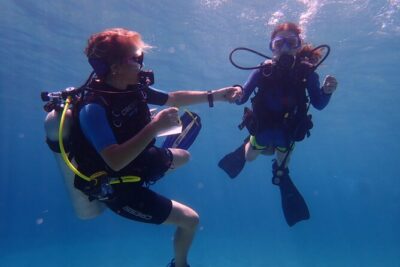
Before you get any air underwater, you get the system. The tour briefing covers everything you need to feel safe and functional: how to equalize your air spaces, the hand signals for communication, and an overview of the exact skills you will be practicing.
That last part matters more than people think. When you know what is coming, you stop wasting mental energy guessing. In real terms, it means you can concentrate on breathing and staying calm rather than wondering what a random gesture might mean.
You will also be shown how the equipment works and what each piece is for. Expect a practical approach. This is not just theory. They want you to understand how the gear supports you, so you are not fighting your setup when it counts.
One more note that is easy to miss: cameras are not allowed during the activity. Waterproof cameras are also not allowed. That is why you should plan on relying on your own memories and any optional photo offers after the session.
Pool Skills: Breathing, Equalizing, and Moving in Full Gear
The pool time is the confidence builder. You start by taking your very first breaths underwater, which is usually the biggest mental hurdle for new scuba participants. Then you practice with the equipment you will use later.
The big skill they focus on is equalizing your ears. That is the part that can turn first-time nerves into discomfort if you do not get it right early. Here, they train you to do it as you move from the pool setting to the training depth, including swimming around in full gear.
I like the structure because it is not just stand and float. It is guided practice that builds muscle memory. If you have ever been worried about being clumsy in the water, this is where that worry gets handled. You will feel your body learn the rhythm.
From the experience style shared in instructor stories, the team tends to keep things calm and patient when someone is scared. In particular, guides like Pavlos and Mick are highlighted for slowing down, reassuring anxious first-timers, and making sure everyone completes the full session.
Walking to the Roman Wall Shore Site
Once the pool work is done, you move to the open-water training area. It is a short walk from Cydive, about 3 minutes, to the shore site near the Roman Wall (QC36+MW Paphos).
This is where the experience shifts from training mode to wonder mode. You are still learning, but now you are doing it with real Mediterranean water and real depth cues. The shoreline setting is beginner-friendly compared to boat-only access, because it helps you orient to where you came from.
Why I think this matters: as a first-timer, you need anchors, literally and emotionally. A shore site near an established center means the experience feels organized, not chaotic.
The Open-Water Experience Near the Roman Harbor Underwater World
The main scuba session runs about 1 hour. The goal for beginners is a descent to 5m during your very first open-water experience. That is deep enough to feel like scuba, not just a slow swim with gear.
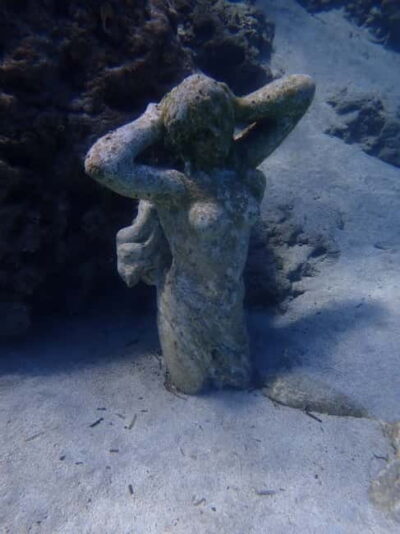
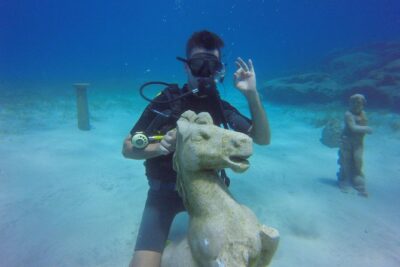
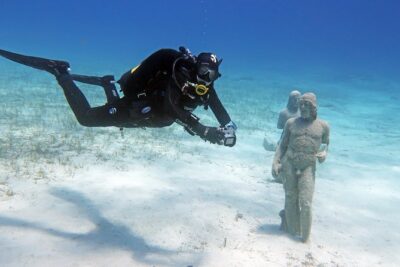
During this part, you are likely to see and explore the underwater Roman harbor area. The standout features include ancient Roman elements like amphorae and lost anchors. In summer, you might also spot green sea turtles.
Here is the real value: you are not just learning how to breathe under pressure. You are learning how to look under pressure. Depth changes what you notice, and the seabed around the Roman Wall gives you something meaningful to focus on besides your own air and breathing.
Also, because this is structured for beginners, you should expect support and supervision throughout. Instructor attention is a major theme in the experiences shared, including calm coaching when someone hesitates about breathing differently or adjusting to the mask.
If you are nervous, treat the first minutes like the pool practice that just got moved outdoors. Your job is to follow the hand signals and keep your breathing steady. Their job is to keep you on track.
Same coast, a different sort of afternoon:


Why the Ancient Underwater Setting Feels Better Than Typical First-Time Scuba
Many first-time scuba trips focus only on the mechanics. This one adds a strong context layer: the Roman harbor underwater world.
That matters because it gives your brain an easy job. Instead of constantly monitoring every sensation, you can shift your attention to what is around you: pottery shapes, anchor remnants, and the overall sense that you are floating beside artifacts rather than just random seabed.
In multiple stories, people are excited by the moment they see Roman structures and pottery underwater, and some even mention spotting a turtle. Even if you do not see wildlife, the underwater architecture gives you a memorable frame for the whole experience.
You also get photo stops. There is a photo stop early in the day and another after the main session. Underwater photos and videos are not included in the price, but the presence of a dedicated photographer shows they expect you to want a tangible souvenir. Based on the way people talk about Charlie’s photos and occasional discounts, you might find post-activity memory options offered.
The Short Follow-Up Class and What You Get at the End
Right after the underwater session, the day does not just end abruptly. There is a brief class component afterward, plus time for coffee and tea and extra refreshments.
From the experience flow, the team seems to treat the end of the day as part of learning and debriefing, not just a checkout moment. It can help if you want to understand what to improve next time, or if you are deciding whether to continue toward full certification.
People also describe receiving fruit and drinks afterward, along with a chance to watch video footage from the experience. That is a nice touch because it lets you review what you did without needing to handle a camera during the session.
Value and Price: Is $106 a Good Deal?
At $106 per person, this is positioned as a value option for a first-timer scuba experience in Paphos. It includes the big costs that usually add up:
- scuba equipment including wetsuit and boots
- a PADI Discover Scuba Diving eLearning product
- water, tea, coffee, and fresh fruit
The eLearning is a quiet advantage. You are not arriving fully cold. You get a link once your booking is confirmed, and you complete the course before the activity date. If you like to arrive prepared, this structure helps.
Where you should expect extra spending is on the photos and videos. Underwater pictures and videos are not included. Towels and sunscreen are also not included. So plan a small add-on budget for personal items and potential souvenir media.
Compared to paid snorkeling or even one-off “try scuba” experiences that often feel gear-light, this includes both equipment and the planned training time in pool and open water, plus the Roman harbor access for your first descent.
Who This Works Best For (and Who Should Skip It)
This tour is ideal if you:
- want a first scuba taste without jumping straight into a certification course
- like clear instruction and hands-on coaching
- want to see something more than open water, with Roman harbor features as the underwater focus
- would benefit from a small group setup (up to 8 participants)
It is not suitable if you:
- are under 10 years old
- are pregnant
- have epilepsy
- have heart problems or respiratory issues
- cannot swim comfortably
Also, if you are feeling congested, you should consider rescheduling until you are clear. That is common sense for scuba comfort.
Timing Tips and Practical Stuff to Bring
You have about 3 hours total. That includes briefing, training class, the walk to the shore site, the main session, and the ending refreshments. Because it is time-boxed, the day can feel like a good sprint rather than a slow afternoon.
Bring:
- swimwear
- a towel
- sunscreen
- a hair tie
Do not bring:
- cameras (including waterproof cameras)
- anything you planned to consume as alcohol or drugs
If you are wondering about flying after, here is the rule you should follow: you cannot do this same day as taking a flight, and you should wait at least 12 to 24 hours after your underwater session before flying.
Should You Book This Paphos Discover Scuba Half-Day?
I would book it if you want a guided, first-time scuba experience with training built in, not just a quick rental-and-go. The combination of pool skills, a structured safety briefing, and the specific open-water goal of descending to 5m makes it feel attainable. You also get a strong payoff in the setting, since the underwater Roman harbor gives you something real to see besides your own breathing.
I would skip or think twice if you are not comfortable swimming, if you fall into the medical exclusions, or if you dislike being without your phone or camera during the session. The experience prioritizes safety and control, and that includes camera restrictions.
If you are even slightly interested in progressing beyond a first taste, this is a smart place to start. The eLearning, the debrief style, and the fact that instructors can be very patient with scared beginners make it a good launching point.
FAQ
How long is the Paphos Discover Scuba tour?
The activity runs about 3 hours.
What is the group size?
It is a small group limited to 8 participants.
Do I need to do eLearning before the activity?
Yes. After booking, you receive a link to the PADI Discover Scuba Diving eLearning product, and you must complete it before your activity date. If it is not completed, you are asked to reschedule.
Is there a medical questionnaire?
Yes. All participants must complete a medical questionnaire, and certain conditions cannot participate, including epilepsy, heart or lung conditions, and pregnancy.
Do I need to know how to swim?
You must be comfortable swimmers. If you cannot swim, you will not be able to participate.
What do you do in the pool?
You practice using the equipment and take your first breaths underwater. You also work on basic skills like equalizing your ears and swimming around in full diving gear.
How deep will I go?
You will descend to 5m on your very first open-water experience.
Are underwater photos and videos included?
No. Underwater pictures and videos are not included in the price.
What should I bring, and what is not allowed?
Bring swimwear, a towel, sunscreen, and a hair tie. Cameras are not allowed, including waterproof cameras. Smoking indoors, alcohol, and drugs are also not allowed.
Can I fly right after the tour?
No. You cannot take a flight on the same day as your underwater session. Plan to wait at least 12 to 24 hours after diving before flying.
Just listed around Paphos
- Local Wineries Tour with Wine Testing from Paphos★ 5.0 · 1 review
- Experience Troodos Gems Shared Tour★ 5.0 · 1 review
- Pafos: Ancient Cyprus and Coastal Landmarks★ 5.0 · 1 review
- Private Transfer from Paphos Airport to Limassol City★ 5.0 · 1 review
- Paphos & Limassol: FAMAGUSTA – Salamis & Varosha Ghost Town★ 5.0 · 1 review
- “Paphos Private Tour: Akamas, Avakas, Turtle Bay & Winery”★ 5.0 · 1 review
- Discover Essence of Cyprus Wines: Private Tsangarides Winery Tour★ 5.0 · 1 review
- Pafos Zoo Visit & Blue Lagoon Cruise with Local Guide from Paphos★ 5.0 · 1 review
Discover Scuba & Wreck Dives, compared.
Introductory Scuba Lesson and Dive with Transfer
Read our review →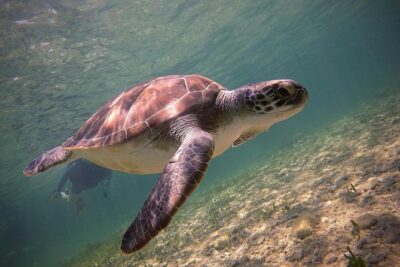
Half-Day Scuba Diving Tour – Discover Scuba Diving!
Read our review →
Browse the lists this tour appears in