
REVIEW · FAMAGUSTA & ANCIENT SALAMIS
FAMAGUSTA & NICOSIA Private Tour from Kyrenia
Kyrenia to Famagusta and Nicosia in one day is a good brain workout. What makes this tour so interesting is the mix of big-picture sights and small details, from icon museum artifacts to the story you see right in the street layout. You also get a true private format, so the pace and questions are yours, not a factory schedule.
My favorite part is the no-surprise budgeting. Entrance fees are included, lunch is included, and you do not end up scrambling for tickets mid-day. I also like the way guides actually teach as you travel, with named examples like Sedat and Cemal bringing history down to something you can picture, not just memorize.
One consideration: the day is long, about 8 to 9 hours, and most stops are fairly short (often 10 to 30 minutes). If you want to linger for an hour in one museum room, you will feel the time pressure.
In This Review
- Key highlights worth your time
- Why Famagusta and Nicosia together feels efficient (and not rushed)
- Pickup, timing, and how the private format really changes the day
- St Barnabas Monastery and Icon Museum, where church icons meet ancient pottery
- Salamis ruins on the east coast, Roman scale in a compact stop
- Famagusta’s walled city, St Nicholas heritage and why walls matter
- Lala Mustafa Pasha Mosque and the ghost-town contrast of Varosha
- Kyrenia Gate, Selimiye Camii, and Buyuk Han in North Nicosia
- Lunch and entrance fees: the real value math
- Guides make the difference, especially when you ask questions
- Who this tour fits best (and who should think twice)
- Should you book the Famagusta and Nicosia private tour from Kyrenia?
- FAQ
- How long is the Famagusta and Nicosia private tour from Kyrenia?
- What is the meeting point in Kyrenia?
- Do you offer hotel pickup and drop-off?
- Is this a private tour?
- What language is the tour offered in?
- Are entrance fees included?
- Is lunch included?
- What time does the tour start?
- What is the cancellation policy?
Key highlights worth your time
- Private pacing across two major cities, with pickup options in Kyrenia and nearby areas
- Entrance fees and lunch included, so your day stays simple
- Icon Museum stop at St Barnabas Monastery, plus an archaeological mini-museum with pottery from 4000 BC onward
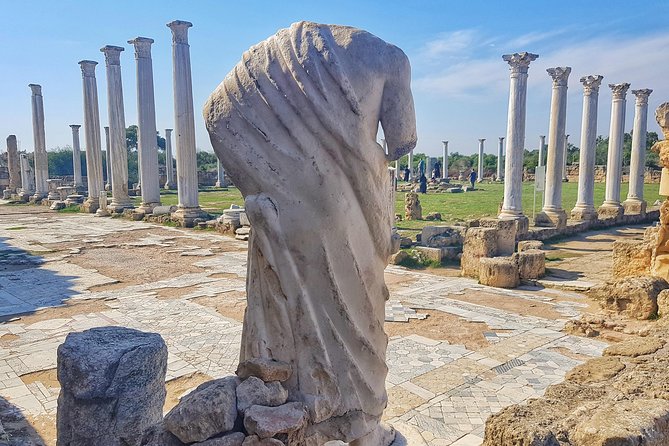
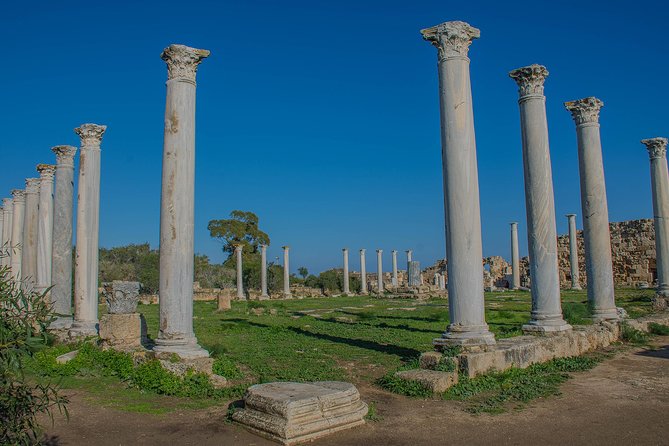
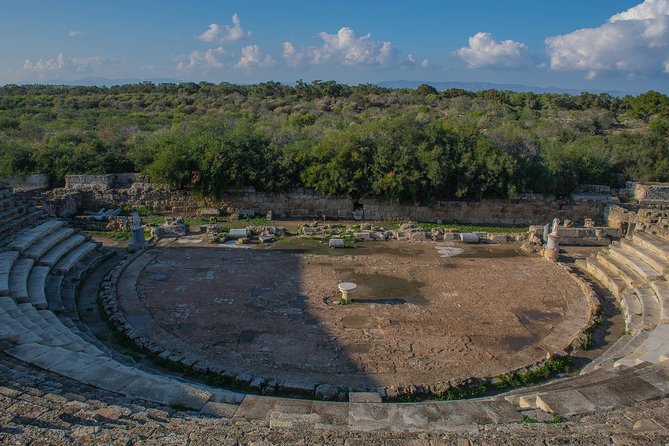
- Salamis ruins with the Roman theatre and gymnasium plus thermal baths area
- Famagusta in layers, from the walled city and St Nicholas heritage to the open-air atmosphere of Varosha
- North Nicosia landmarks in one circuit, including Selimiye Camii and Buyuk Han
Why Famagusta and Nicosia together feels efficient (and not rushed)
This is the kind of day tour that makes sense when you are staying around Kyrenia and want the best “wow per hour” without changing hotels. You cover two key places that most first-time visitors find hard to stitch together on public transport.
The value is not just the famous names. The route is built to show how Cyprus shifted over centuries, then sharply over one modern rupture. You see that in what is preserved, what is repurposed, and what is left behind.
Because it is private, you can also ask for stop-by-stop clarity. A good guide helps you understand why a building looks the way it does, and why a site feels the way it feels, even when you only have minutes.
More crossings to Famagusta and Salamis:
- Ayia Napa/Protaras/Larnaka: Famagusta and Salamis Day Trip
★ 4.7 · 559 reviews - Protaras: Famagusta, Blue Lagoon and Turtle Cove Boat Trip
★ 4.6 · 428 reviews - Ayia Napa: Blue Lagoon, Turtle Cove and Famagusta with BBQ
★ 4.9 · 386 reviews
Pickup, timing, and how the private format really changes the day
You start at 9:00 am, and the tour runs roughly 8 to 9 hours. Pickup is offered from hotels in the Kyrenia region, plus Alsancak, Lapta, and Çatalköy. If you are staying outside those zones, you should confirm your exact pickup point before booking.
What I like about the setup is that it keeps you from losing your best daylight to logistics. In real terms, that means you spend more time walking in the old streets of Famagusta and around the monuments of Nicosia, not hunting for buses.
Also, the tour uses a mobile ticket, and you get confirmation at booking. That matters if you like to stay organized, especially for a day with multiple timed stops. And because it is private, only your group participates, so you are not stuck waiting behind strangers who keep changing their minds.
St Barnabas Monastery and Icon Museum, where church icons meet ancient pottery
The day opens at St Barnabas Monastery and its Icon Museum. You get about 30 minutes here, and it is a strong start because the site feels both spiritual and scholarly.
The church setting is important. It is not just a display room, so the icons and artefacts land with more context. The icon museum houses a collection of Cypriot artefacts, and you can usually understand what you are looking at faster when the guide points out the connections between art and local culture.
Then you get an archaeological museum component that is small but genuinely interesting. The highlight is the pottery display, with complete pieces spanning from 4000 BC onwards. That range helps you grasp a simple point: Cyprus has been shaped by people living here for a very long time, long before the later empires left their architectural fingerprints.
Practical note: bring patience for a short museum time window. This is a “see the key things and understand them” stop, not a slow, hours-long browse.
Salamis ruins on the east coast, Roman scale in a compact stop
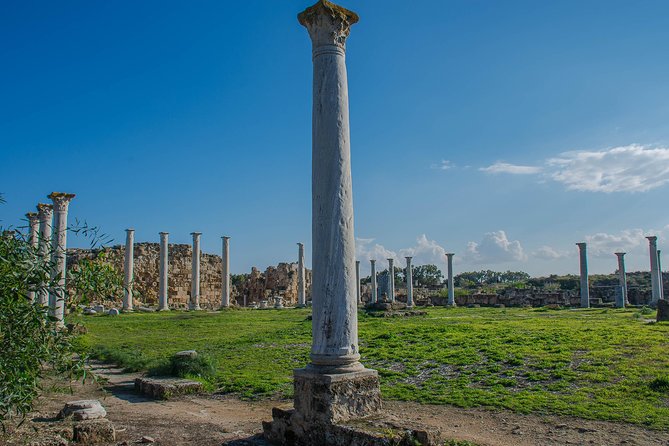
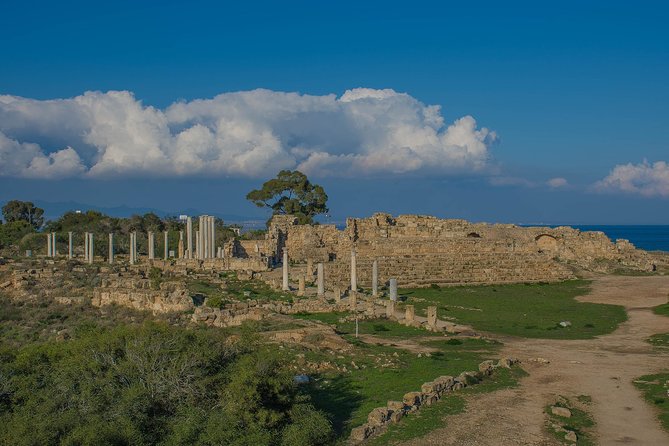
Next comes Salamis, one of Cyprus’s most important ancient city sites, on the island’s east coast. You get about 30 minutes, which is enough to grasp the layout if you move steadily and listen closely.
This city mattered because it hosted a long sequence of dominant powers across time, including Assyrians, Egyptians, Persians, and Romans. In the Roman period, Salamis was huge, with estimates around 150,000 people in the 2nd century. You do not need to memorize numbers, but it helps explain why the remaining structures feel so confident and grand.
Two areas you will focus on are the Roman theatre and the gymnasium with thermal baths. Even when you are looking at ruins, these parts tell you how public life worked: spectacles, education or training spaces, and bathing culture.
What to watch for: ask your guide how these spaces connect to daily life. Theatre and baths are not random stops. They suggest routines and social expectations, and your guide can help you “read” the site instead of just seeing stone.
Famagusta’s walled city, St Nicholas heritage and why walls matter
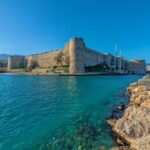
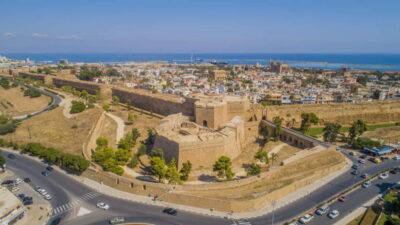
Then you shift into Famagusta, and the first thing you feel is the old-city boundary. The walled city is often described as an open-air museum, and that phrase fits. You are not trapped behind glass. You are walking through history that still shapes the street plan.
You spend about 30 minutes here, and it is a smart chunk of time. You can get a feel for the scale of the fortifications, then focus on major monuments like St Nicholas Cathedral.
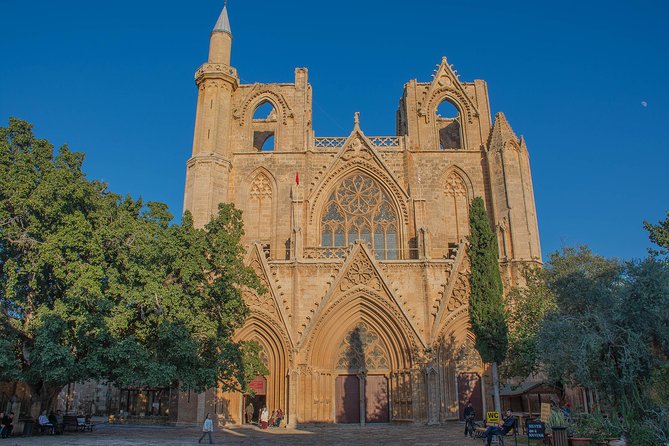
The cathedral is key because its identity changed. Over time, it became known as Lala Mustafa Pasha Camii, a mosque in today’s North Cyprus. This kind of repurposing is a common theme across the region, but Famagusta makes the change feel very direct because the building remains a dominant landmark.
Small tip: wear comfortable shoes. The walls and streets are historic, not designed for modern smooth walking. You will move more than you expect for a “single city” stop.
More Kyrenia and St Hilarion days:
Lala Mustafa Pasha Mosque and the ghost-town contrast of Varosha
After the walled city overview, you get a shorter stop at Lala Mustafa Pasha Mosque, about 10 minutes. This monument is the former Gothic Cathedral of St Nicholas, and it is one of Famagusta’s most important sights.
Even in a brief visit, it helps to know what to look for. Gothic architecture carries specific cues, and the building’s story reflects how European religious architecture was adapted over the centuries.
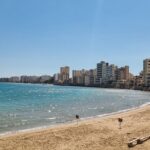
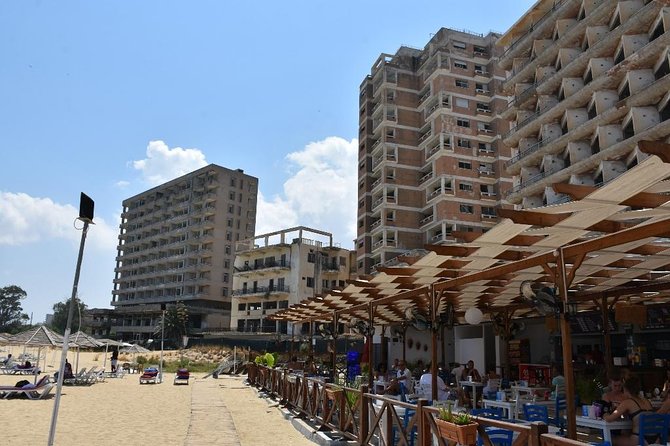
Then you have the most emotionally striking stop: Ghost Town Famagusta, the area known as Varosha. You get around 10 minutes. Varosha was once a booming tourist resort, and after the division of Cyprus in 1974, it came under Turkish control and now stands abandoned, often described as a ghost town.
I recommend treating this stop with extra care. Even if you only have minutes, it is worth slowing your pace for a moment and letting the site’s silence do its job. The value here is not spectacle. It is understanding how political events can freeze an entire place mid-life.
Kyrenia Gate, Selimiye Camii, and Buyuk Han in North Nicosia
The second half of the day becomes a tour of North Nicosia’s most recognizable layers.
First, you pass through the Kyrenia Gate, historically called Porta del Proveditore. It is one of the original gates in the Nicosia walls, built in the 16th century by Venetians as part of the new city walls. Gates like this are more than entries. They show you how cities defended themselves and how power organized movement.
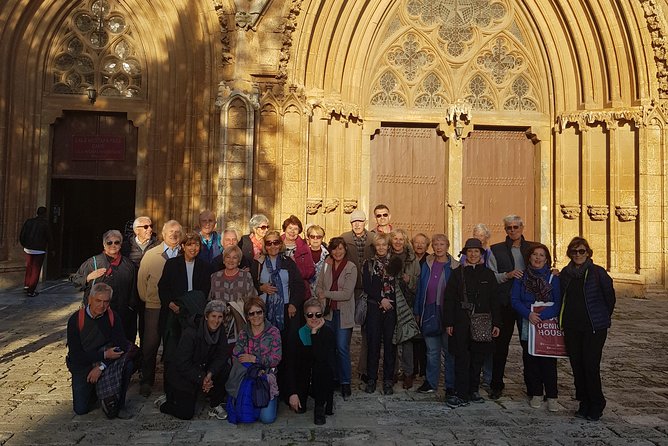
Then comes Selimiye Camii. You get about 15 minutes. This site is the former Roman Catholic Cathedral of Saint Sophia, converted into a mosque by the Ottomans. It is described as the largest and oldest surviving Gothic church in Cyprus, and it is one of North Nicosia’s main landmarks.
If you like architecture, this is one of the best stops of the day because the building style ties to broader European Gothic trends. The cathedral heritage stretches back to the 13th century, and your guide can help you recognize the forms even if you are not an architecture specialist.
After that, you visit Buyuk Han (The Great Inn), also about 15 minutes. It is an Ottoman-period 16th-century inn in the traditional market centre inside the city walls. It is the largest inn on the island, and it is also one of two remaining inns in Cyprus that still keep their original shape and appearance.
This stop is useful because it rounds out the day. You have seen religious architecture and ancient ruins. Now you see the kind of building that served commerce and travelers. It is a reminder that history is not only monuments, it is infrastructure too.
Lunch and entrance fees: the real value math
At $222.29 per person for a private, full-day outing, the question is not just the sticker price. It is what you avoid spending on the day itself.
This tour includes all entrance fees and lunch. That means the day does not turn into a pay-as-you-go scavenger hunt. Some stops are paid and clearly marked as included, like St Barnabas Monastery and Salamis, and some are free to enter, like parts of Famagusta, Lala Mustafa Pasha Mosque, Varosha, Selimiye Camii, and Buyuk Han.
In practice, that matters for two reasons:
- You can plan without last-minute cash decisions.
- Your guide can keep the schedule moving because you are not waiting for a ticket line or a missing payment moment.
If you are doing a two-city day anyway, the included costs are a big part of why this feels fair, especially for a private setup.
Guides make the difference, especially when you ask questions
One theme from the people who did this day with Sedat or Cemal is simple: communication and pacing. You get picked up on time, the guide contacts you quickly about pickup timing, and the tone stays friendly.
What I value most is that the guide does not treat the day like a script. Sedat, for example, is described as answering questions patiently, including details tied to living through the 1974 era. Cemal is noted for sharing history during the drive and keeping the mood entertaining.
You do not need to be a history nerd to benefit. Even if you only want the main takeaways, the guide’s explanations help you connect the ruins and buildings to real life, how people lived, worked, prayed, and moved through space.
Who this tour fits best (and who should think twice)
This is a good match if you:
- Want a first-timer friendly day that hits major monuments in both Famagusta and North Nicosia
- Like guided context, not just photos
- Appreciate included entrances and lunch so you can focus on the sites
It may be less ideal if you:
- Want long museum time at one location
- Prefer a slower day with fewer stops and more sitting
- Get cranky about walking on uneven, old-street surfaces
Also, because many stops are short by design, I suggest you come ready to observe. The payoff is the way the day’s parts connect, not the time spent inside a single room.
Should you book the Famagusta and Nicosia private tour from Kyrenia?
If you want one day that gives you a strong mental map of North Cyprus, I would book it. The included lunch, entrance fees, and private format make it feel well thought out, and the guide style described by Sedat and Cemal points to a day that stays friendly while still being informative.
Choose it with eyes open about pacing. This is not a linger-and-stroll tour. It is a highlights circuit where every stop gets its moment, usually 10 to 30 minutes, then you move on to the next layer of the story.
FAQ
How long is the Famagusta and Nicosia private tour from Kyrenia?
The tour runs about 8 to 9 hours.
What is the meeting point in Kyrenia?
The meeting point is Baldöken Otoparkı Ziya Rızkı Cd 95, Girne 99300. The meeting point is in front of the ticket office at the Baldoken Car Par in Kyrenia City Centre.
Do you offer hotel pickup and drop-off?
Yes. Hotel pickup and drop-off is offered for hotels in the Kyrenia region, and also from hotels in Alsancak, Lapta, and Çatalköy. You should contact the provider for your exact location.
Is this a private tour?
Yes. It is a private tour/activity, and only your group participates.
What language is the tour offered in?
The tour is offered in English.
Are entrance fees included?
Yes. Entrance fees are included, and some stops are free.
Is lunch included?
Yes. Lunch is included.
What time does the tour start?
The start time is 9:00 am.
What is the cancellation policy?
The experience is non-refundable and cannot be changed for any reason. If you cancel or ask for an amendment, the amount you paid will not be refunded.
Just listed around Cyprus
- From Roses to Mountain, Agros (Troodos area)- Wine -Nature Walk★ 5.0 · 1 review
- E-bike tour from Omodos to Milomeris Waterfall-Milia Bridge through Platres.★ 5.0 · 1 review
- 5 Hour trip-Guided Craft Beer Brewery tasting & Cypriot Food Trip★ 5.0 · 1 review
- Green Bay Private Scuba Diving Adventure★ 5.0 · 1 review
- Private 5-Hour Jeep Tour in Cyprus from Ayia Napa★ 5.0 · 1 review
- 2 Hours Private Sunrise Sup with breakfast★ 5.0 · 1 review
- St. Hilarion Castle and Bellapais ruines- with private guide★ 5.0 · 1 review
- Turkish Landmarks in Old Town Nicosia – Private Walking Tour★ 5.0 · 1 review
Famagusta & Ancient Salamis, compared.
Ayia Napa/Protaras/Larnaka: Famagusta and Salamis Day Trip
Read our review →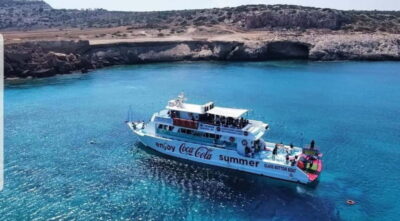
Famagusta, Blue Lagoon and Turtle Cove Boat Trip
Read our review →Blue Lagoon, Turtle Cove and Famagusta with BBQ
Read our review →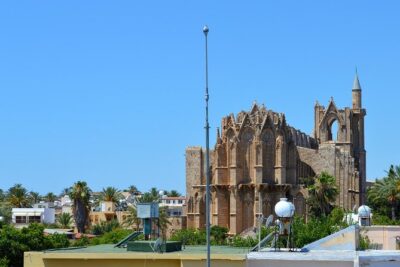
Ghost-Town Famagusta Mini Bus Tour from Protaras and Ayia Napa
Read our review →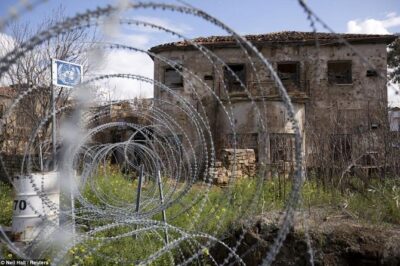
Full-day Famagusta: Lost Cities & Coastal Secrets from Paphos
Read our review →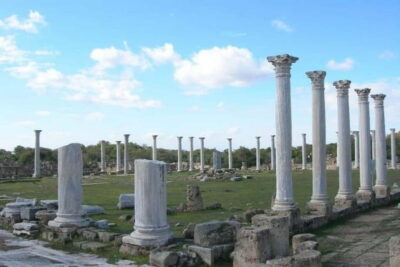
Choirokitia & Famagusta Guided Tour with Transfers
Read our review →
From Aya Napa/Protaras: Varosha Ghost Town Tour on a Red Bus
Read our review →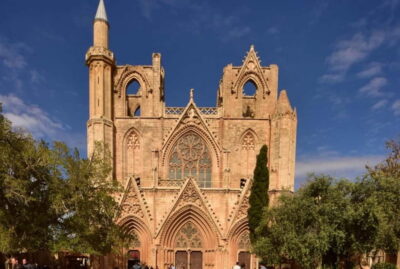
Famagusta & Salamis with a Polish-speaking Guide
Read our review →Browse the lists this tour appears in